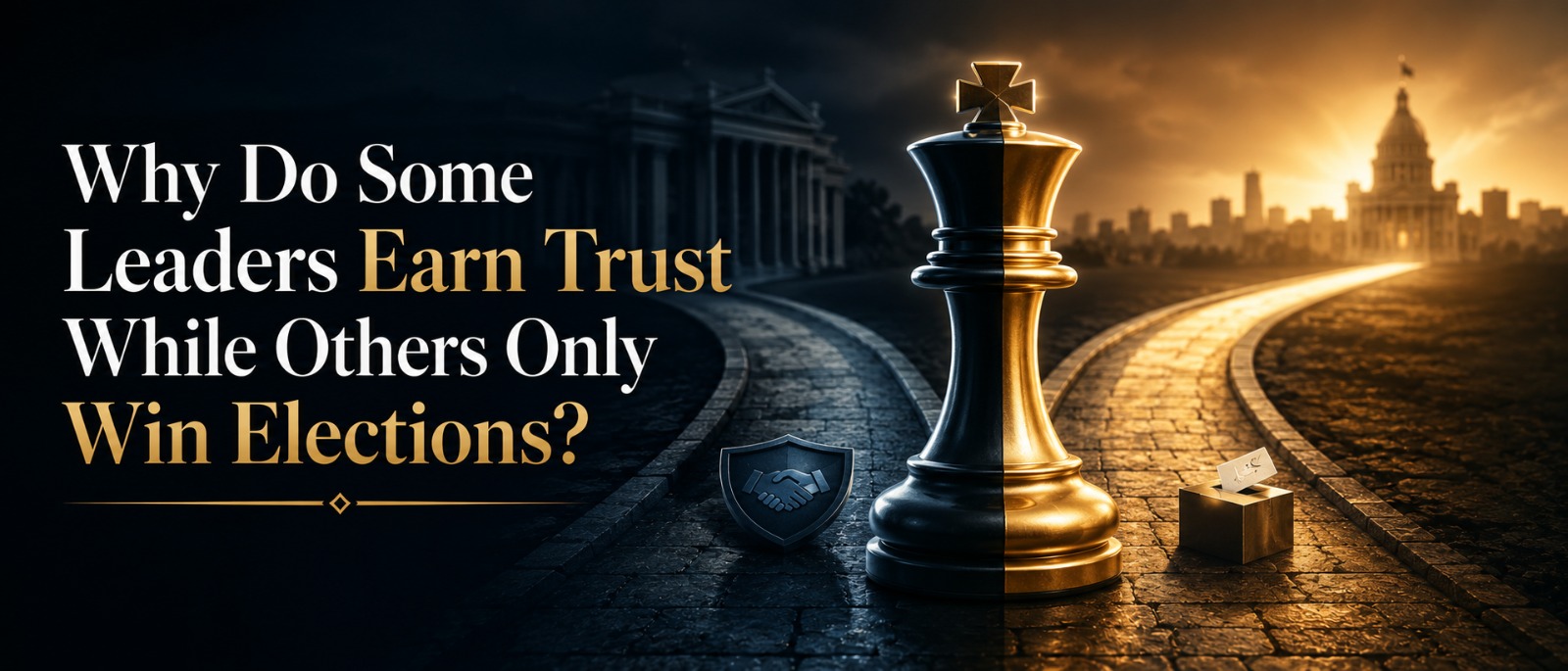
Is trust won during an election campaign, or is it earned through everyday leadership?
Every election produces winners.
But not every winner earns trust.
Winning an election gives a leader authority.
Trust gives them legitimacy.
The two are not always the same.
People may vote for a leader because of ideology, party loyalty, campaign promises, or even because they believe the alternatives are weaker. But trust goes much deeper than electoral success. It is built over time through actions, consistency, and the confidence that a leader will stand by the people even when the headlines fade away.
That raises an important question:
What makes people truly trust a political leader?
1. Can People Trust a Leader Whose Actions Don’t Match Their Words?
One of the quickest ways to lose public trust is to say one thing and do another.
People understand that governments face challenges and that not every promise can be fulfilled immediately. What they expect, however, is honesty and consistency.
When a leader’s actions reflect their words, credibility grows. When promises repeatedly fail to match reality, trust begins to disappear.
People don’t expect perfection.
They expect sincerity.
2. Should Leadership End Once the Election Is Over?
Campaigns are filled with rallies, speeches, and public meetings.
But leadership begins after the votes are counted.
People trust leaders who remain visible after elections, who continue visiting communities, listening to concerns, and solving problems instead of appearing only during campaign season.
Trust is built through presence, not just promises.
3. If People Don’t Understand a Policy, Can They Truly Support It?
A leader’s responsibility is not only to make decisions.
It is also to explain them.
Whether it is an economic reform, a new law, or a welfare programme, people are more likely to support it when they understand why it was introduced and how it affects their lives.
Anyone can make a simple issue sound complicated.
Very few people can make a complicated issue sound simple.
That is what makes communication a leadership skill.
4. Can You Lead People Without Listening to Them?
Leadership is often associated with speaking.
But trust is built through listening.
Citizens want leaders who understand their concerns, not just leaders who deliver speeches. They want to feel that their voices matter and that their experiences influence decision-making.
People may forget what a leader said.
They rarely forget whether they felt heard.
5. When Crisis Strikes, What Do People Really Look For?
A leader’s true character is often revealed during difficult times.
Whether it is a natural disaster, an economic slowdown, or a national emergency, people look for calmness, honesty, and responsibility.
They may forgive mistakes.
But they rarely forget leaders who panic, avoid responsibility, or disappear when challenges arise.
Crisis does not create character.
It reveals it.
6. Can Leadership Survive Without Fairness?
No leader can satisfy everyone.
But people expect fairness.
Citizens are more likely to trust leaders who make decisions based on principles rather than political convenience. Even when people disagree with a decision, they are more willing to accept it if they believe it was made fairly.
Fairness creates legitimacy.
And legitimacy strengthens leadership.
7. Does Accountability Make Leaders Stronger?
Every government makes mistakes.
The difference lies in how leaders respond.
Do they accept responsibility?
Do they explain what went wrong?
Do they work to fix it?
Or do they simply blame others?
People respect leaders who own their decisions.
Accountability may invite criticism in the short term, but it builds trust in the long run.
8. Do People Remember Policies, or How Leaders Made Them Feel?
Politics is not only about budgets, policies, and legislation.
It is also about dignity and respect.
People want leaders who treat citizens with respect, communicate honestly, and acknowledge their concerns.
They may not remember every policy announcement.
But they often remember how leadership made them feel.
Respect creates connection.
And connection creates trust.
So, What Really Makes People Trust a Leader?
Trust is not built through one speech, one election victory, or one campaign promise.
It grows through consistency.
It grows through honesty.
It grows through accountability.
And it grows when people believe their leader genuinely understands their lives.
Power may help someone win an election.
But trust is what helps them lead.
Power may win elections. Trust is what builds legacies.
What do you think matters most in building public trust today: honesty, communication, accountability, or performance?
Leave a Reply