
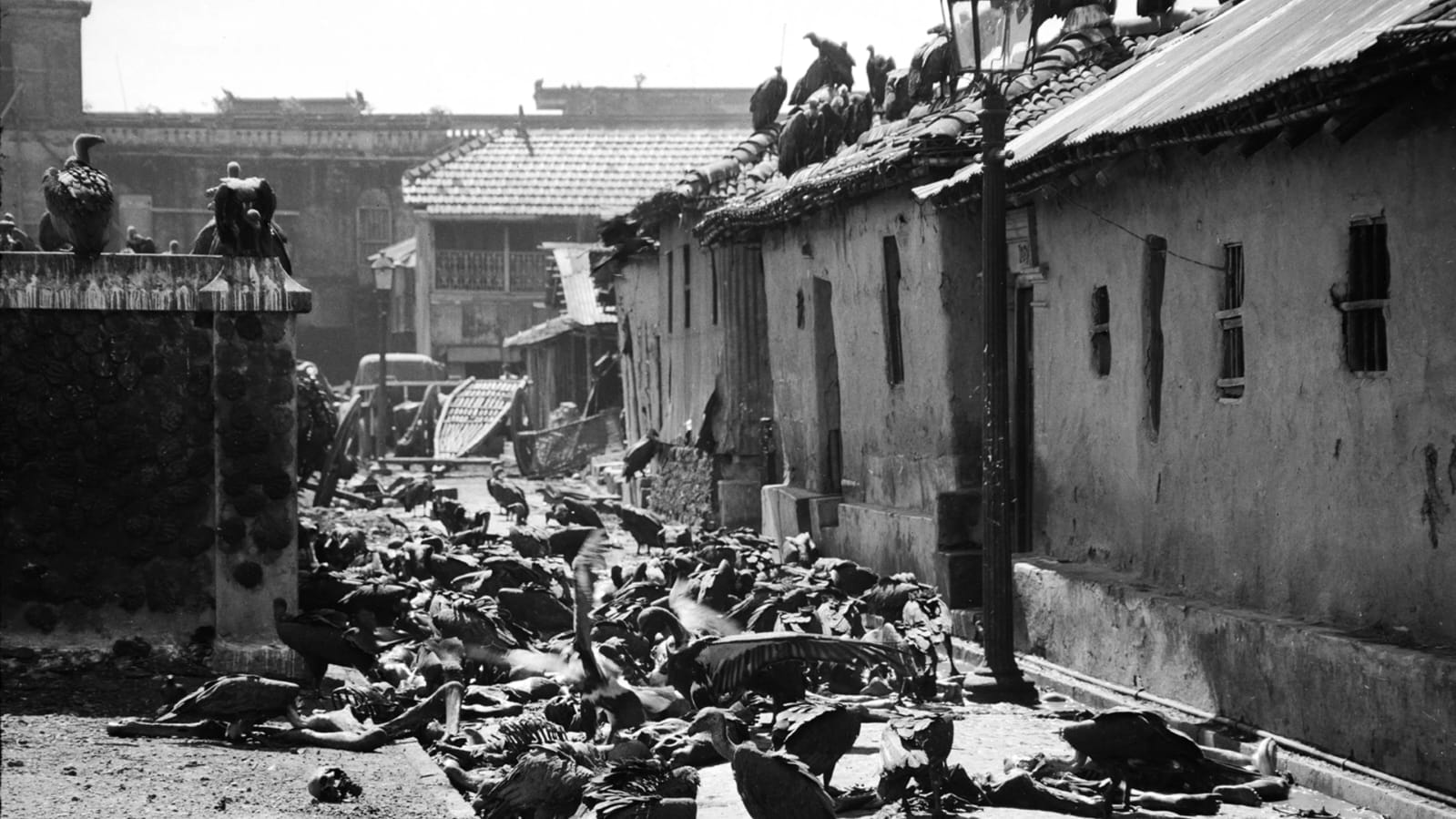
16 August 1946.
India stood less than a year from formal independence.
The British were packing up. Negotiations had collapsed.
And instead of a measured path to freedom, Calcutta woke to organised slaughter.
This was not spontaneous chaos. It was the direct result of a political decision. The All India Muslim League under Muhammad Ali Jinnah had declared 16 August Direct Action Day after the Cabinet Mission talks failed. The demand was clear. Pakistan or the country would be made unlivable. In Bengal where the League held power under Chief Minister H S Suhrawardy that declaration was turned into a public holiday. Offices closed. Transport stopped. Shops shut. The streets were cleared for mobilisation.
Large Muslim League crowds gathered at the Maidan. The political theatre was open. What followed was not theatre. It was killing.
Factories silent. Trams dead. Ordinary Hindus going about their lives suddenly found themselves targets. Homes attacked. Shops looted. People cut down because of their faith. The violence did not begin as mutual free for all. It began with League mobilisation in a city whose government had handed the day over to that mobilisation. Police response was weak or absent in the early hours. The administration that should have protected citizens failed them.
The numbers remain contested. Four thousand five thousand up to ten thousand dead across the days that followed with tens of thousands injured and around a hundred thousand displaced. Exact counts will always be argued. What is not arguable is the scale of the horror and the fact that Hindu neighbourhoods took the first heavy blows. Families wiped out. Women assaulted. Bodies left in streets for dogs and vultures. A city that had lived with mixed neighbourhoods for generations watched trust collapse in hours.
Suhrawardy as Premier and Home Minister sat at the centre of the controversy. Questions about preparedness police inaction and political signalling have never gone away. Later no confidence moves in the legislature attacked the ministry handling of the bloodshed. Responsibility was not limited to one man but the man in charge of the province cannot be washed clean of the failure to stop the killing when it was still containable.
The violence spread. Retaliation followed. Noakhali in October saw Hindu communities targeted with particular savagery. Bihar answered. Punjab later exploded. One act of organised communal mobilisation fed the next. Nehru himself later spoke of the chain reaction. Once the cycle started ordinary people on both sides paid. But the first major spark in Calcutta was lit by the League call and the provincial government facilitation of it.
In the middle of that bloodshed one name stands out on the Hindu side. Gopal Chandra Mukherjee known as Gopal Patha. A Bowbazar man from a family that ran a meat shop already known in local circles he did not wait for distant leaders or lectures on non violence. When Hindu localities came under attack he organised. He gathered young men hundreds of them from the neighbourhood from factories from the streets. He formed what became an effective local force. Arms were collected where they could be found including leftovers from the war years. The instruction he gave was blunt and widely reported. If they kill one of ours answer with ten. His groups set up defences protected Hindu areas and pushed back. By the later days of the killing the tide in parts of the city had turned. League pressure eased. Appeals reached him to stop. He demanded the other side stand down first. The worst of the organised slaughter subsided.
Gopal Patha is remembered by many Hindus who lived through those days as the man who refused to let their community be slaughtered without resistance. He sheltered people. He fought. He later refused Gandhi call to surrender arms saying those weapons had saved the women and the people of his area. That refusal was not romanticism. It was the hard lesson of August 1946. When the state fails and one community is mobilised for violence the other cannot rely on sermons.
Gandhi approach deserves sharp criticism here. His lifelong insistence on non violence as the highest path had moral weight in the struggle against British rule. Against an organised communal onslaught that began with a political call for direct action it left Hindus exposed. The League had already shown it was prepared to use street power. Suhrawardy government had given the day over. In that moment abstract principle did not stop knives and fire. Gandhi was not in Calcutta during the peak of the killing. His later peace missions Noakhali then the 1947 Calcutta stay that some called a miracle came after the damage. Asking people who had just defended their lives to disarm while the memory of the streets was still raw was a decision that prioritised an ideal over the lived reality of those who had been forced to fight. History records the human cost of that idealism when it met organised communal mobilisation.
The British were still the nominal rulers. Their authority was crumbling after the war. The Cabinet Mission had failed to produce agreement. Power was transferring in an atmosphere of mutual distrust. Direct Action Day proved how quickly political deadlock could turn into corpses in the streets. Partition did not begin solely on that day but the Calcutta killing hardened the conviction on all sides that living together under one constitution was becoming impossible. Fears deepened. Mistrust calcified. The later massacres of 1947 had their rehearsal in 1946.
The dead were not political abstractions. They were shopkeepers labourers families students. Hindu and Muslim both died. Yet the decision that opened the door was the League and executed in a League run province that declared a holiday for the mobilisation. To pretend otherwise is to sanitise the record. Ordinary people from both communities became killers once the cycle started. That does not erase the sequence.
What remains is the warning. Political leaders who mobilise on communal lines who declare public holidays for partisan shows of strength who allow the streets to fill with charged crowds while the police look the other way create the conditions for catastrophe. Words become weapons. Neighbours become targets. Once the first bodies fall revenge follows as night follows day. The dead of Calcutta were not ammunition for later arguments. They were human beings whose lives ended because politics turned religion into a battlefield and the government failed to stop it.
Gopal Patha response was the response of a man who saw his community under attack and refused to wait for permission or ideology. That is why he is remembered with respect by those who value survival over slogans. Gandhi later appeals for surrender and reconciliation however well intentioned came after the lesson had already been written in blood. When one side organises for violence and the state fails the other side must organise for defence or accept slaughter.
16 August 1946 was called Direct Action Day. History knows it as the Great Calcutta Killing. It was the moment the road to freedom ran through streets of corpses. The correct memory is not inherited hatred. It is clear eyed recognition of who lit the match who failed to put it out and who stood up when the fire reached their door. The dead deserve that honesty.
The Political Decision That Opened the Door
The roots of that August day sat in the failure of constitutional talks. The Cabinet Mission had come to India with proposals for a loose federation that might keep the country united while giving substantial autonomy to provinces. Congress and the Muslim League could not agree on the details of grouping and the nature of the centre. Jinnah withdrew the League acceptance of the plan. On 29 July 1946 the League council resolved on direct action to achieve Pakistan. The language was deliberately open ended. It left room for interpretation. In practice it became a signal for street power.
Jinnah set 16 August as the day. In most of India the observance remained a political protest. In Bengal under a League ministry it became something else. Suhrawardy government declared a public holiday. That single administrative act changed the character of the day. Government offices closed. Courts did not sit. Many private businesses shut. The normal restraints of daily life were removed. Crowds could gather without the usual interruptions of work and transport. League organisers expected a massive turnout at the Maidan meeting. They got it.
Contemporary accounts describe the morning as unusually quiet at first. Then the processions began. Slogans filled the air. The demand for Pakistan was shouted. Some of the language used in the mobilisation was openly communal. Hindus who opened shops or tried to continue normal work became visible targets. Clashes started in different parts of the city as the day wore on. What began in isolated incidents spread with frightening speed.
The government that should have maintained order was itself the product of League politics. Suhrawardy held the dual role of Premier and Home Minister. Responsibility for police and internal security rested with him. Intelligence reports had indicated the possibility of trouble. The decision to declare a holiday in the face of those warnings remains one of the most criticised acts of the period. When violence erupted the early police response was inadequate. In some areas officers appeared reluctant or overwhelmed. Army units were eventually brought in but only after the killing had already claimed thousands.
This was not an accident of history. It was the result of a political calculation that treated communal mobilisation as a legitimate tool. Once that tool was used the consequences could not be controlled by speeches alone.
How the Streets Turned into Killing Grounds
By the afternoon of 16 August reports of attacks were coming from multiple localities. Hindu shops were looted. Houses set on fire. Individuals singled out and killed. The pattern was not random. Areas with mixed populations saw the first major breakdowns. Processions that had been political became aggressive. Retaliatory groups formed. Once blood was spilled the cycle fed itself.
Night brought worse scenes. Bodies lay in the open. Fires lit the skyline. Families fled or barricaded themselves. In some places the violence took on an organised character with groups moving from one target to another. Contemporary descriptions speak of medieval barbarity. Corpses were left in streets for days. Vultures gathered. The stench of death hung over parts of the city.
Both communities suffered. That fact is not in dispute. Hindu victims were numerous in the opening phase. Muslim victims rose as resistance and retaliation grew. The death toll estimates vary widely because many bodies were never properly counted. Some were thrown into the river. Others burned. Official figures and private tallies differ. Scholarly ranges settle between four thousand and ten thousand dead with far higher numbers of injured and displaced. Around one hundred thousand people were made homeless in the city alone according to several historical estimates.
The human reality behind those numbers is harder to capture. A father who left for work and never returned. A mother searching for children in the smoke. Neighbours who had shared walls for years suddenly treating each other as enemies. Shops that represented a lifetime of work reduced to ash overnight. The psychological scar cut deeper than the physical losses. Trust between communities that had coexisted for generations was shattered in a matter of days.
The Role of the Bengal Government and Suhrawardy
H S Suhrawardy remains the most controversial figure of those days. As the elected Premier of Bengal and the man controlling the home portfolio he bore direct responsibility for public order. Critics then and later accused him of failing to act decisively in the early hours when the violence could still have been contained. Some contemporary observers went further and suggested that the holiday declaration and the political atmosphere created by League mobilisation amounted to facilitation.
Suhrawardy spent much of the critical period in the police control room. Reports of his demeanour vary. Some describe panic once the scale became clear. Others note that he continued to defend the League position even as bodies piled up. In the legislative debates that followed Syama Prasad Mookerjee moved a no confidence motion that focused heavily on the ministry responsibility for the Calcutta violence. The motion did not succeed but the charges stuck in public memory among large sections of the Hindu population.
Later attempts to rehabilitate Suhrawardy image have pointed to the complexity of the situation the involvement of local goondas on both sides and the broader failure of British authority. Those points have some truth. Complexity does not erase accountability. The man who held the levers of provincial power when the streets ran with blood cannot claim innocence simply because others also failed.
The British Governor and the central authorities also share blame. The empire was exhausted after the war. Its capacity and will to impose order had weakened. Yet the formal responsibility for law and order still rested with the colonial structure. The delay in deploying adequate military force allowed the killing to continue longer than it should have.
Gopal Patha and the Hindu Resistance
While distant leaders issued statements and the administration dithered local Hindus in several neighbourhoods began to organise their own defence. The most prominent of those figures was Gopal Chandra Mukherjee known as Gopal Patha. Born into a Bowbazar family that ran a meat shop he had already built a reputation as a tough local organiser. He had connections with young men across the area and links to earlier revolutionary traditions through family and local networks.
When news reached him of Hindu goalas killed in Beliaghata and of attacks spreading he acted. He called his boys together. The force he raised numbered in the hundreds according to later accounts. Some put the number near eight hundred at its peak. He collected arms from whatever sources were available including wartime leftovers traded in the black market. The instruction he issued was clear and widely remembered. For every one of ours killed take ten of theirs.
His groups moved to protect Hindu localities. Barricades went up. Lookouts were posted. Rapid response teams formed. In areas that had seen unchecked attacks the presence of organised resistance changed the dynamic. Attackers who had faced little opposition now met determined pushback. By 18 and 19 August the course of the fighting in central Calcutta began to shift. Hindu neighbourhoods that might otherwise have been overrun held. In some places the counter pressure moved outward.
Gopal Patha later described his motivation in simple terms. He acted to save the women of his area and the people. He claimed his men targeted those who had taken part in the attacks rather than indiscriminately. Whether every action met that standard is impossible to verify after the fact. What is clear is that his organisation provided a centre of resistance at a moment when official protection had collapsed.
As the violence continued League leaders including Suhrawardy himself sought contact. Appeals were made to stop the bloodshed. Gopal Patha response was consistent. The other side must first order its supporters to stand down and disarm. Only then would he consider restraint. That stance forced a mutual easing. By around 20 August the worst of the organised killing had subsided though isolated incidents continued.
His later encounter with Gandhi is equally revealing. When Gandhi arrived in Calcutta months afterward and called for the surrender of arms Gopal Patha refused. He told those who carried the message that the weapons had saved the people of his area. He would not hand them over. The question he is reported to have asked remains pointed. Where was Gandhi during the Great Calcutta Killings.
That refusal was not defiance for its own sake. It was the practical conclusion drawn by a man who had watched the consequences of unarmed vulnerability. Idealism that leaves one community defenceless in the face of organised violence is not moral superiority. It is a luxury that costs lives.
The Chain Reaction That Followed
Calcutta did not end the story. The killings there created a template and a justification for further violence. In October 1946 Noakhali in eastern Bengal saw large scale attacks on Hindu communities. Forced conversions rape and murder were reported on a significant scale. Gandhi walked through the affected villages in a peace mission that brought attention but could not undo the damage already done.
Retaliation came in Bihar. Hindu mobs targeted Muslim populations in several districts. The death toll there was also heavy. The pattern repeated elsewhere. Each episode supplied arguments and grievances for the next. By the time Punjab exploded in 1947 the cycle had become almost self sustaining.
Nehru described the sequence as a chain in which one act of violence became the justification for another. That observation was accurate. Hatred once unleashed travels. People who had no connection to the original political dispute paid the price. The political leaders who had started the process of communal mobilisation bore responsibility for setting the machine in motion even if they could not control every subsequent step.
The Human Cost Beyond the Numbers
History books record the figures. Four thousand dead. Six thousand. Ten thousand. One hundred thousand displaced. Those numbers flatten the reality. Behind each number stood a person with a name a family a daily life that ended or was shattered.
The dead were not political abstractions. They were shopkeepers, labourers, families, students. Hindu and Muslim both died. Yet the decision that opened the door was the League’s, executed in a League-run province that declared a holiday for the mobilisation. To pretend otherwise is to sanitise the record. Ordinary people from both communities became killers once the cycle started. That does not erase the sequence.
What remains is the warning. Political leaders who mobilise on communal lines, who declare public holidays for partisan shows of strength, who allow the streets to fill with charged crowds while the police look the other way, create the conditions for catastrophe. Words become weapons. Neighbours become targets. Once the first bodies fall, revenge follows as night follows day. The dead of Calcutta were not ammunition for later arguments. They were human beings whose lives ended because politics turned religion into a battlefield and the government failed to stop it.
Gopal Patha’s response was the response of a man who saw his community under attack and refused to wait for permission or ideology. That is why he is remembered with respect by those who value survival over slogans. Gandhi’s later appeals for surrender and reconciliation, however well-intentioned, came after the lesson had already been written in blood: when one side organises for violence and the state fails, the other side must organise for defence or accept slaughter.
16 August 1946 was called Direct Action Day. History knows it as the Great Calcutta Killing. It was the moment the road to freedom ran through streets of corpses. The correct memory is not inherited hatred. It is clear-eyed recognition of who lit the match, who failed to put it out, and who stood up when the fire reached their door. The dead deserve that honesty.
Leave a Reply