
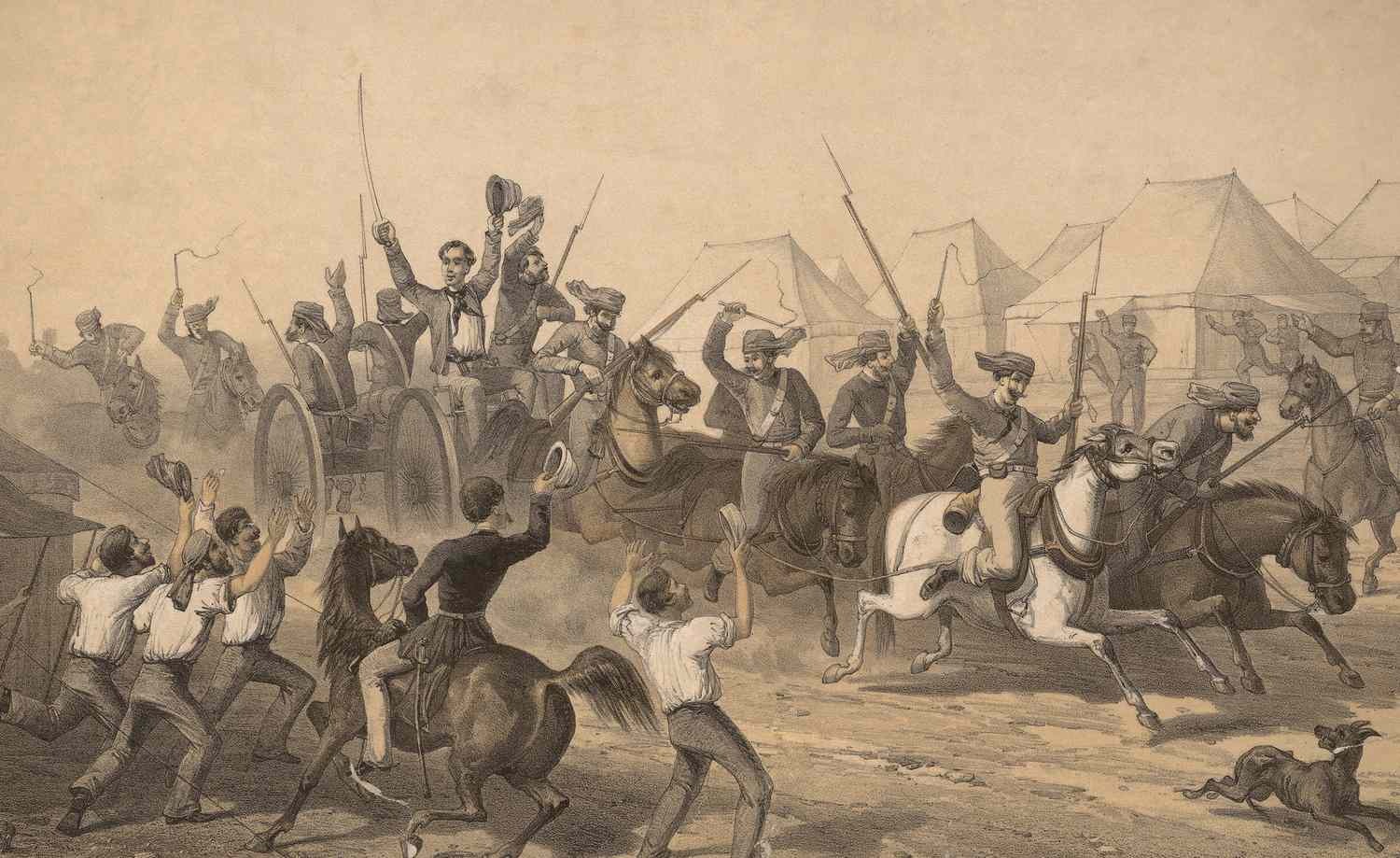
10 May 1857. Meerut.
Indian sepoys refused the new cartridges. Rumours said they were greased with cow and pig fat. For Hindu and Muslim soldiers this was not a small insult. It was a direct attack on their faith. When the British arrested and humiliated them, the sepoys broke. They shot their officers. They marched to Delhi. They declared the old Mughal emperor Bahadur Shah Zafar as their leader.
That was the spark. The fire that followed nearly burned the East India Company to the ground.
This was not a simple mutiny over greased paper. That story is the one the British preferred. It made the whole thing look like a sudden religious panic. The truth ran deeper. For a hundred years the Company had looted, annexed, and humiliated. They destroyed local industries. They forced farmers into cash crops and then taxed them into starvation. They swallowed kingdoms through the Doctrine of Lapse. They treated Indian rulers like children and Indian soldiers like expendable tools. By 1857 the resentment had piled up like dry gunpowder. The cartridges were only the match.
Once it started, the revolt spread fast. Delhi fell. Kanpur rose under Nana Sahib. Lucknow under Begum Hazrat Mahal. Jhansi under Rani Lakshmibai. Bihar under Kunwar Singh. Ordinary sepoys, peasants, landlords, and local rulers all joined. For a few months large parts of North India slipped out of British control. The Company looked like it might actually collapse.
The British response was pure savagery.
They did not just fight to regain territory. They set out to terrorise. Villages were burned. Prisoners were blown from the mouths of cannons. Mass hangings became routine. In Delhi the slaughter went on for days after the city was retaken. Women and children were not spared in the revenge. British officers wrote home with open pride about the killing. They called it necessary. They called it civilisation.
Rani Lakshmibai fought until she died on the battlefield, sword in hand. Tantia Tope kept the guerrilla war alive long after the main centres fell. Kunwar Singh, an old man, led his forces with skill until the end. These were not mindless rebels. They were people who had decided that living under Company rule was no longer acceptable.
The British won in the end. They had better weapons, better organisation, and the ability to bring in reinforcements from outside. By 1858 the main centres of resistance had been crushed. Bahadur Shah Zafar was tried and exiled to Rangoon. The Mughal name was finished. The East India Company was finished too. The British Crown took direct control. They called it the end of the mutiny and the beginning of proper rule.
But the revolt changed everything.
It destroyed the myth that Indians would always accept foreign domination. It forced the British to change how they governed. It left a memory of resistance that later generations picked up. When nationalists in the twentieth century spoke of the First War of Independence, they were not inventing a slogan. They were naming what 1857 had actually been: the first time large parts of India rose together against the Company and nearly brought it down.
The British wrote the early histories. They called it a mutiny. They focused on the cartridges and the killings of Europeans. They stayed quiet about the decades of annexation, the economic ruin, and the racial arrogance that made the explosion inevitable. They stayed even quieter about their own methods of reconquest.
Look at it clearly. An empire that ruled through force met force in return. When the ruled finally hit back, the rulers answered with mass executions and collective punishment. Then they wrote books explaining why they were the civilised ones.
1857 was not perfect. It was not coordinated like a modern war. Different leaders had different aims. Some wanted the old order back. Some wanted the British gone by any means. Unity was incomplete. That is why it failed militarily.
But failure does not erase the meaning. For the first time the anger of sepoys, peasants, and princes flowed in the same direction. For the first time the Company faced a real chance of being driven out. And for the first time the British showed exactly how far they would go to keep their grip.
The men and women who rose in 1857 did not win the country back. They forced the empire to drop the mask. After 1857 no one could seriously claim that British rule rested on Indian consent. It rested on superior force and the willingness to use it without limit.
That is the real legacy.
They called it a mutiny.
It was a revolt.
They called their revenge justice.
It was terror.
And the people who fought it, from the sepoys of Meerut to the Rani of Jhansi, proved one thing that the British never wanted proved:
India would not stay quiet forever.
Leave a Reply