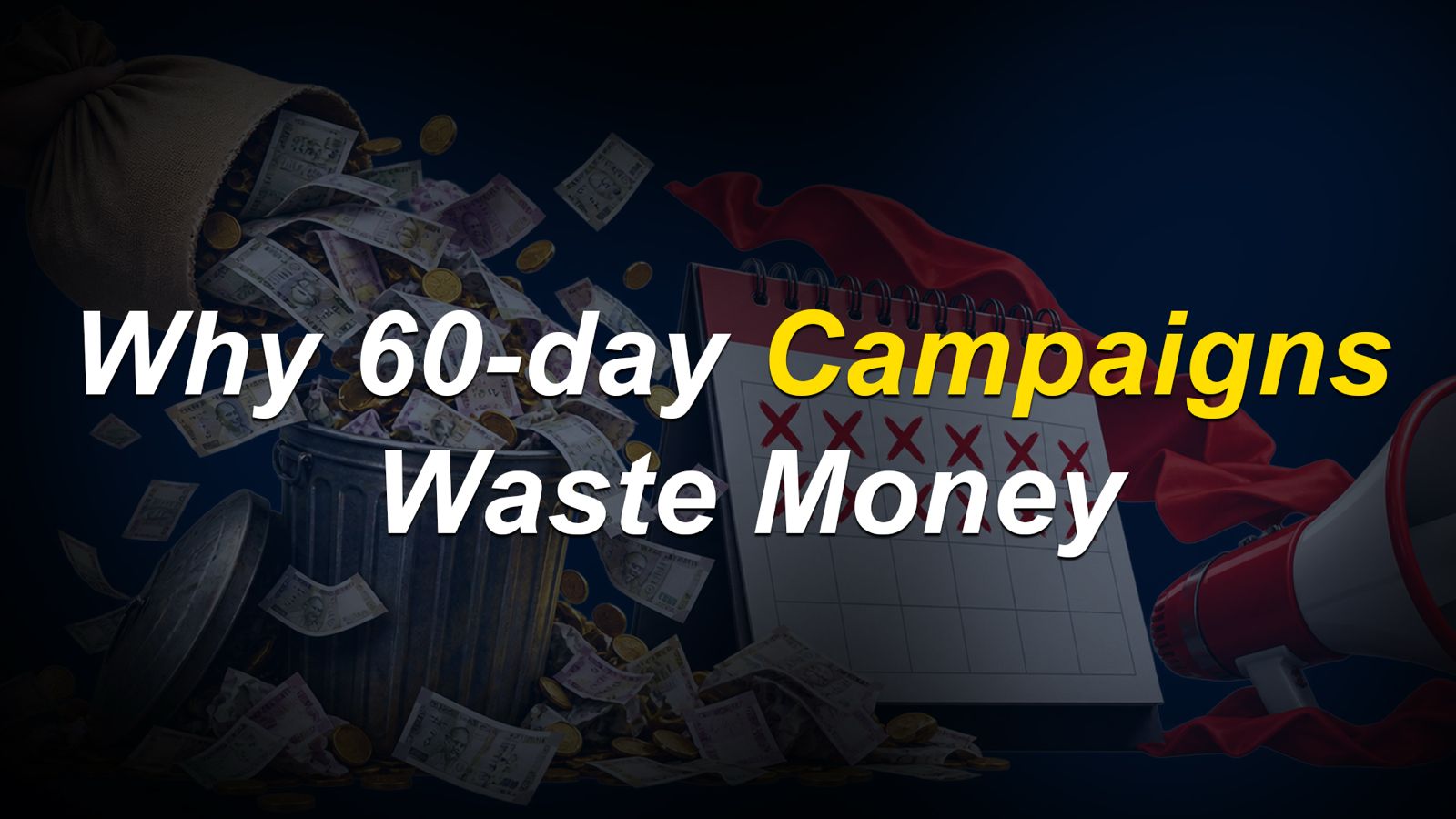
Most parties and candidates treat elections like a last-minute exam.
They sleep for four years and ten months.
Then they wake up sixty days before polling and throw money at everything that moves.
Posters go up overnight. Rallies are booked in a rush. Paid news is arranged. Influencers are hired. Digital teams start blasting messages that feel forced. Door-to-door workers are recruited at the last moment. Loudspeakers run from morning till night.
They spend roughly the same amount they could have spent carefully over five years.
Only now it is compressed into pure panic.
And then they act surprised when the results do not match the noise they created.
This is not strategy.
This is expensive desperation.
The Real Cost of Sleeping
When you ignore the ground for almost an entire term, three quiet damages take place.
First, your organisation weakens. Booth-level workers lose touch with voters. Local leaders drift or start exploring other options. The cadre that should have been your biggest strength becomes unreliable or transactional.
Second, the narrative is shaped by someone else. Opponents, local media, and daily issues fill the empty space. By the time you start speaking, many people already have fixed opinions about you. Changing those opinions in sixty days is extremely hard and extremely costly.
Third, trust erodes. Voters notice who shows up only when elections approach. They may accept the temporary attention, the freebies, and the sudden visits. But they do not feel lasting loyalty. They understand the difference between presence and performance.
A sixty-day campaign cannot rebuild what four years of absence destroyed.
Money Spent in Panic Buys Less
The same rupee works harder when spent early and steadily.
Over five years you can build real booth committees that actually know their voters by name and by problem. You can solve small local issues that create genuine goodwill instead of temporary gratitude. You can train workers who understand the area instead of outsiders hired for two months and then forgotten. You can create a steady digital presence that feels natural rather than sudden spam. You can identify weak pockets early and fix them long before the opponent notices.
When you wait until the last sixty days, every activity becomes more expensive. Media rates rise because demand is high. Influencer fees rise because everyone is booking at the same time. Even local workers demand higher payments because they can sense the urgency and the lack of options.
You spend the same total money.
You get far less value for it.
Panic spending also creates waste. Multiple agencies are hired without coordination. Messages contradict each other. Resources are poured into areas that were already safe while weak booths remain neglected. The campaign looks busy from the outside. From the inside it is often chaotic.
What a Serious Campaign Looks Like
Serious players do not disappear after winning or losing.
They keep a light but constant presence on the ground. They listen to complaints even when no election is near. They fix what can be fixed without waiting for the next manifesto. They maintain relationships with local influencers, community leaders, teachers, shopkeepers, and booth workers throughout the term. They treat the organisation like a living structure that needs regular attention, not a machine that can be switched on two months before polling.
By the time the official campaign begins, they are not introducing themselves to voters. They are only intensifying work that already exists. The last sixty days become an acceleration, not a desperate rescue operation.
This approach is quieter. It looks less dramatic. It does not generate as many loud videos in the final stretch. But it produces something more valuable: a base that does not need to be rebuilt from zero every time.
The Comfortable Position
When the real work is done over years, the final stretch feels completely different.
You already know which booths are solid and which ones need extra attention. You already know which issues still create anger and which ones have been handled. You already have a list of people who will work without being paid extra rates because they feel part of something longer than one election cycle.
The opponent who woke up late is still hiring strangers, printing last-minute posters, and trying to create visibility from nothing. You are simply turning up the volume on a machine that was already running.
That is the comfortable position.
Most parties never reach it because they prefer the drama of a short, loud, expensive final push. It feels like action. It creates the impression of energy. It generates headlines and social media activity. It also wastes large amounts of money and loses elections that could have been won with better timing.
The Simple Truth
If you are serious about winning, stop treating the five-year term as free time or recovery time.
The election is not decided in the last sixty days.
It is only confirmed then.
The real work happens in the long quiet period when cameras are not watching and no one is counting rally sizes. That is when trust is either built or lost. That is when organisations either stay alive or slowly die.
Spend the money then.
Build then.
Listen then.
Correct mistakes then.
Or keep waking up late, spending the same amount in a state of panic, and wondering why the results refuse to change.
The choice is straightforward.
Most still choose sleep.
And then they call the defeat bad luck.
Leave a Reply