
The calendar said the British were leaving in two days.
On paper it looked clean. Power would transfer. Two new countries would be born. Flags would go up. Speeches would be made. The long fight would end.
On the ground it looked nothing like that.
Across the subcontinent people were already moving. Not in neat lines. In panic.
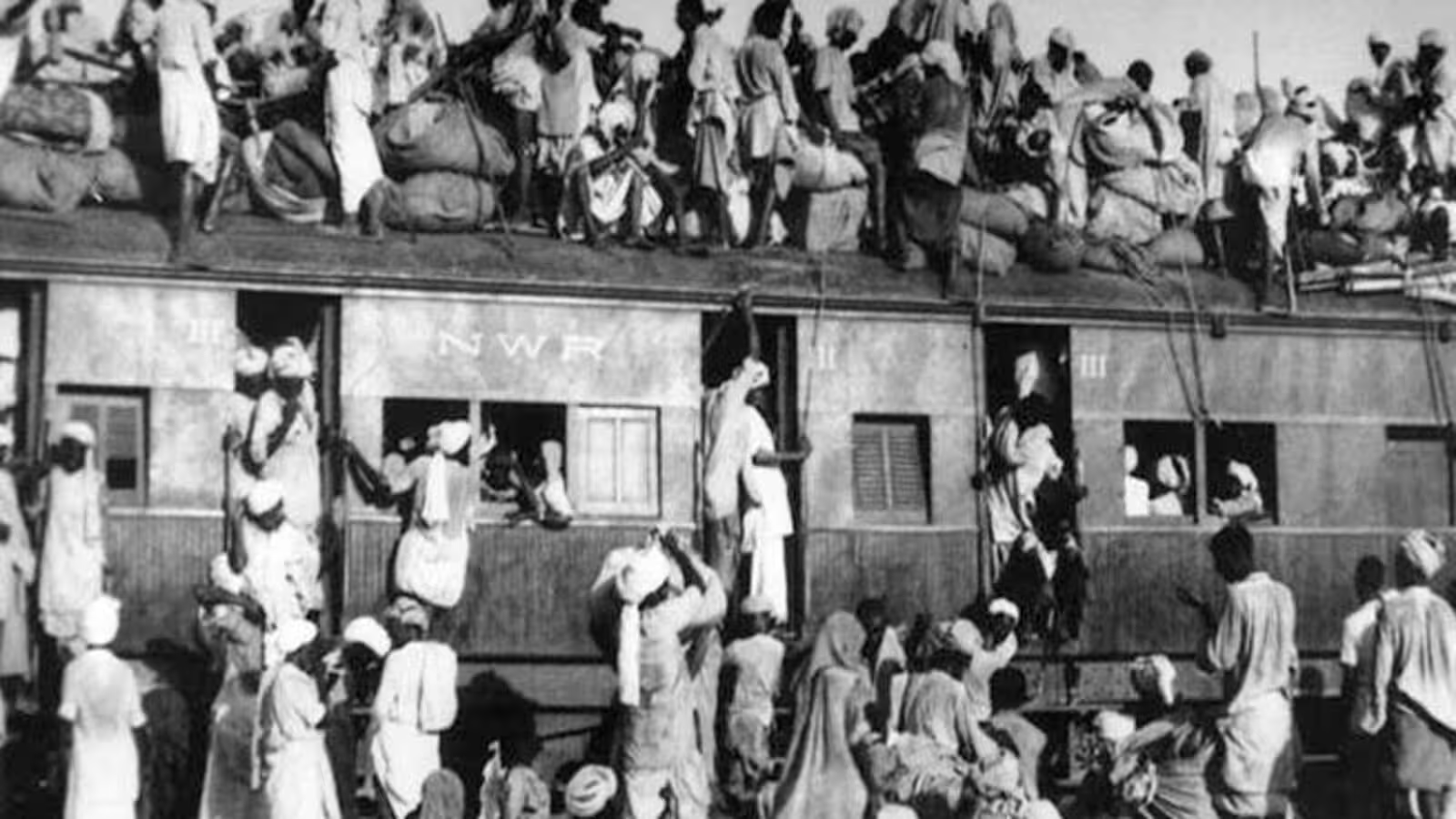
Hindu and Sikh families from what would become Pakistan were walking or packing into trains heading east.
Muslim families from what would stay India were heading west.
Carts loaded with whatever they could carry. A few pots. Some clothes. The jewellery that might buy safety. Children crying from hunger and fear. Old people walking until their feet bled and then walking further because stopping meant death. The roads of Punjab were full of these long, dusty columns of broken lives. Some made it. Many did not. The ones who fell behind were often never seen again.
The trains were worse. People packed into compartments until no one could sit or breathe. Roofs full of bodies clinging on.
Some trains arrived with more dead than living. The violence that had started earlier in the year had not stopped. It had only grown hungrier.
As the date of independence came closer, the killings did not pause for history. They sped up. As if the approaching freedom itself had given permission for the final settling of scores.
In the cities the last British officials were packing their own bags. Files were being divided like spoils. Furniture was being labelled. The big houses that had flown the Union Jack for generations were getting ready for new occupants. In Delhi the preparations for the ceremony were underway. In Karachi the same. Speeches were being written. The transfer of power was being rehearsed like a carefully staged play.
But outside those rooms the real story was the movement of millions. No one had properly planned for this many people moving at once. The borders were still being drawn by a man who barely knew the land. Villages that had been mixed for centuries suddenly found themselves on the wrong side of a line someone had drawn on a map in a hurry. Families who had lived as neighbours became refugees overnight. People who had shared wells and festivals and small quarrels were now hunting each other.
The joy was real for many. After two hundred years the foreign rule was ending. People who had spent their lives in the freedom movement could finally see the day. In some places there were already small celebrations. Flags were being stitched in secret. People practised the new anthems. Children were told that from the fifteenth the country would be free and everything would be better.
Yet the fear sat right next to the joy and often swallowed it. In Punjab the fear was strongest. In Bengal too. The news coming from the villages was bad. Fires lighting up the night. Attacks on trains and columns. Whole communities wiped out or forced to run with nothing. The leaders spoke of peace and unity from safe rooms. On the ground the peace was already dead. It had been murdered by the same politics that was now preparing to celebrate freedom.
Two days. That was all that was left.
Mountbatten would hand over power with a smile. Nehru would speak at midnight about a tryst with destiny. Jinnah would take charge in the new Pakistan. The photographs would show smiling faces and raised flags. The history books would record the speeches and call it a great moment.
They would record less easily the columns of refugees that kept moving through those final days. The trains that kept arriving with horror written on the walls and floors. The families who crossed the new border with nothing except the clothes they wore and the memory of the home they would never see again. The women who were taken. The children who watched their parents die. The old men who sat down on the road and never got up.
Freedom came. It came with a price that is still being counted in broken families and abandoned homes and stories that were never fully told.
On 13 August 1947 the nation stood on the edge of something it had wanted for generations.
It also stood on the edge of one of the largest and bloodiest forced migrations human beings have ever inflicted on themselves. The British were leaving in a hurry. The maps were being changed by men who would not have to live with the consequences. And millions of ordinary people were paying for it with their homes, their families, their dignity, and their lives.
That was the real picture two days before independence.
Not just the ceremony.
Not just the speeches.
The chaos. The blood. The fear. The long lines of people walking into an unknown future because the land they had always called home had been declared unsafe by history.
The British left.
The flags went up.
And the wound they helped create is still open.

Leave a Reply