
A campaign is about convincing people to vote for you.
Governance is about giving them a reason to trust that vote.
That is where the real test of a politician begins.
During an election, constituencies come alive.
Roads fill with campaign vehicles.
Speeches happen every evening.
Manifestos are discussed.
Candidates meet thousands of people.
Promises are everywhere.
Then the votes are counted.
The posters slowly disappear.
The rallies stop.
The microphones go quiet.
But for the person who voted, nothing has ended.
In fact, everything has just begun.
Winning a Seat Is Only the Beginning
In the 2024 Lok Sabha election, India had 543 parliamentary constituencies and nearly 97.98 crore registered electors.
More than 64.64 crore votes were ultimately cast.
Behind those numbers are millions of individual expectations.
Someone wants a better road.
Someone needs a hospital.
A student wants a college.
A young graduate wants a job.
A small business owner wants simpler access to government schemes.
An elderly citizen wants a pension application processed without making five trips to an office.
The ballot may be counted once.
The problems remain every day.
That is why an election victory should not be treated as the destination.
It is the beginning of a five year responsibility.
The Constituency Is Not a Vote Bank
One of the easiest mistakes in politics is to see a constituency only through electoral numbers.
But a constituency is not a spreadsheet.
It is a collection of neighbourhoods, villages, markets, schools, hospitals, businesses and homes.
It contains people who voted for you.
People who voted against you.
And people who did not vote at all.
Once elected, an MP represents all of them.
That is one of the most important differences between campaigning and governing.
During a campaign, the question is:
Will you vote for me?
After the election, the question should become:
How can I serve you?
Representation Is More Than Parliament
An MP’s job is not simply to attend Parliament and speak.
Parliamentary work includes participating in debates, asking questions, contributing to committees, examining legislation and holding the government accountable.
But representation also has a constituency dimension.
People expect their elected representatives to understand local problems and connect citizens with the appropriate institutions.
And there is an important distinction here.
An MP cannot personally solve every problem.
A road may fall under a municipal authority.
A hospital may be a state responsibility.
Police and public order are generally state subjects.
A school may fall under a local or state government.
Good representation therefore is not about pretending an MP controls everything.
It is about knowing who is responsible, where the problem belongs, and how to push the system towards a solution.
That is governance.
Listen Before You Announce
A politician can spend five years making speeches without ever truly understanding a constituency.
The alternative is simple.
Listen.
Hold regular public meetings.
Meet students.
Speak with traders.
Visit villages.
Talk to women’s groups.
Meet farmers.
Sit with local officials.
Ask citizens what is not working.
And perhaps most importantly, ask a question politicians do not ask often enough:
What problem have I not heard about?
Because government data can tell you how many people live in an area.
Only people can tell you what living there actually feels like.
The Numbers Behind Representation
The scale of India’s constituencies makes this difficult.
In the 2024 Lok Sabha election, the average parliamentary constituency had roughly 18 lakh registered electors, although the actual size varied enormously across states and constituencies.
One representative cannot personally meet millions of people.
That is why modern representation needs systems.
Constituency offices.
Public hearings.
Digital grievance channels.
Regular consultations.
Local volunteers.
Citizen surveys.
Ward and village level feedback.
The goal should be to turn scattered complaints into patterns that a representative can actually act upon.
Development Needs Follow Up
There is another important part of the job: following through.
India’s MPLADS allows each Lok Sabha MP to recommend works of developmental nature within their constituency.
Under the current guidelines, the annual entitlement is ₹5 crore per MP.
Eligible works include areas such as drinking water, primary education, public health, sanitation and roads.
But recommending a project is not the same as completing it.
A politician should be asking:
Was the work sanctioned?
Was it started?
Was it completed?
Was the money used properly?
Is the asset actually helping people?
This is where politics becomes administration.
And administration requires patience.
Accountability Should Not End With Election Day
Indian voters are increasingly exposed to information about their representatives.
They can see parliamentary speeches.
They can track questions.
They can examine election affidavits.
They can compare promises with outcomes.
And the data sometimes raises uncomfortable questions.
For example, an ADR analysis of the 543 MPs elected in 2024 found that 251 MPs, or 46 percent, had declared criminal cases in their election affidavits.
This does not mean those MPs were convicted.
Declared cases should not be treated as proof of guilt.
But the figures show why transparency and informed citizenship matter.
The same principle applies to performance.
Citizens should be able to ask:
What did my representative promise?
What did they actually do?
What did they raise in Parliament?
What constituency issues did they pursue?
What remains unfinished?
Democracy becomes stronger when these questions are normal rather than uncomfortable.
The Best Politicians Stay Accessible
There is a difference between being visible and being accessible.
A politician can have millions of followers online and still be difficult for an ordinary citizen to reach.
Accessibility is quieter.
It is the constituency office where someone actually responds.
It is the assistant who returns a call.
It is the public meeting where criticism is allowed.
It is the representative who listens even when there is no camera present.
Because the real test of a politician is not how many people surround them at a rally.
It is whether an ordinary citizen can reach them when something goes wrong.
The Five Year Clock
Every elected representative has a clock running.
Five years can sound like a long time.
It is not.
Infrastructure projects take time.
Policy reforms take time.
Institutional changes take time.
Building trust takes even longer.
That is why the best representatives should think beyond the next election.
Not:
What will make me popular this year?
But:
What will still matter to this constituency ten years from now?
That change in thinking can transform politics.
The Voter Is Watching
The 2024 election recorded about 66.1 percent voter turnout according to the Election Commission’s final data.
India’s electorate has also grown enormously, from about 17.3 crore electors in the first Lok Sabha election of 1951-52 to nearly 97.98 crore in 2024.
That growth represents more than numbers.
It represents generations of citizens entering the democratic process.
And today’s voters have more ways than ever to observe their representatives.
They can watch Parliament.
Read speeches.
Track government schemes.
Check data.
Question decisions.
Share experiences instantly.
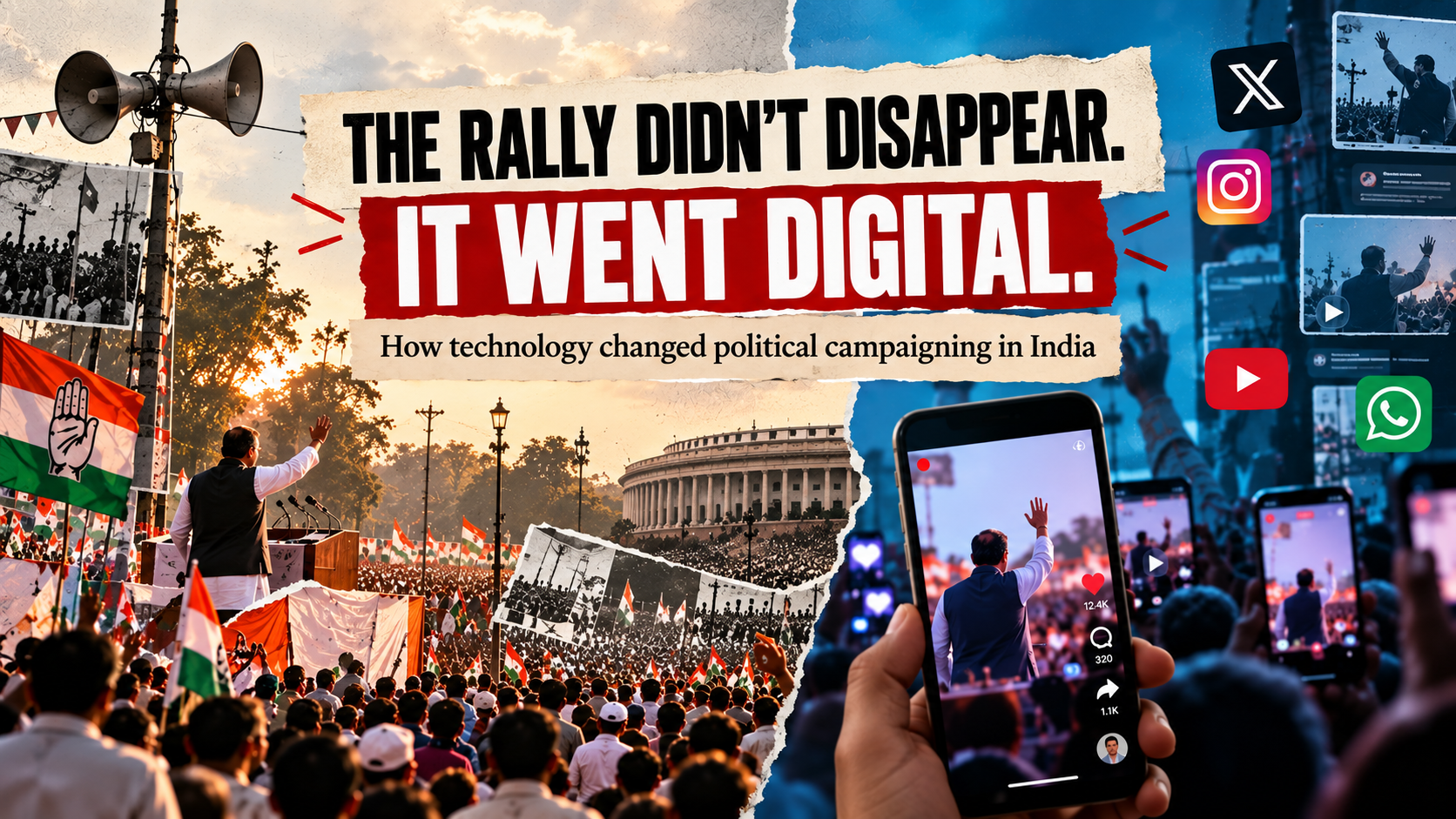
The relationship between politician and voter is no longer limited to an election campaign.
It is continuous.
Politics Should Have a Longer Memory
A politician’s greatest achievement should not be the number of rallies they addressed.
It should be the number of problems they helped solve.
Not the number of posters printed.
But the number of citizens who felt represented.
Not the size of the victory margin.
But the quality of the work that followed.
Because an election victory lasts one day.
A good road can last decades.
A school can educate generations.
A functioning health centre can save lives.
A policy can change an entire community.
That is the difference between winning an election and governing well.
Politics Begins Where the Campaign Ends
The campaign asks people for their vote.
Governance asks what that vote means.
A politician can win a seat through speeches, organisation, strategy and public support.
But respect cannot be won at a rally.
It has to be earned slowly.
Through listening.
Through accessibility.
Through accountability.
Through work that people can see and feel.
The campaign ends when the votes are counted.
The real political journey begins the next morning.
Because a seat can be won in one day.
A constituency has to be earned every day.

Leave a Reply