
Every government begins with a vision.
Every leader enters office with promises, priorities, and the belief that their decisions will improve people’s lives.
Yet history has repeatedly shown that governments do not always lose because they fail to govern.
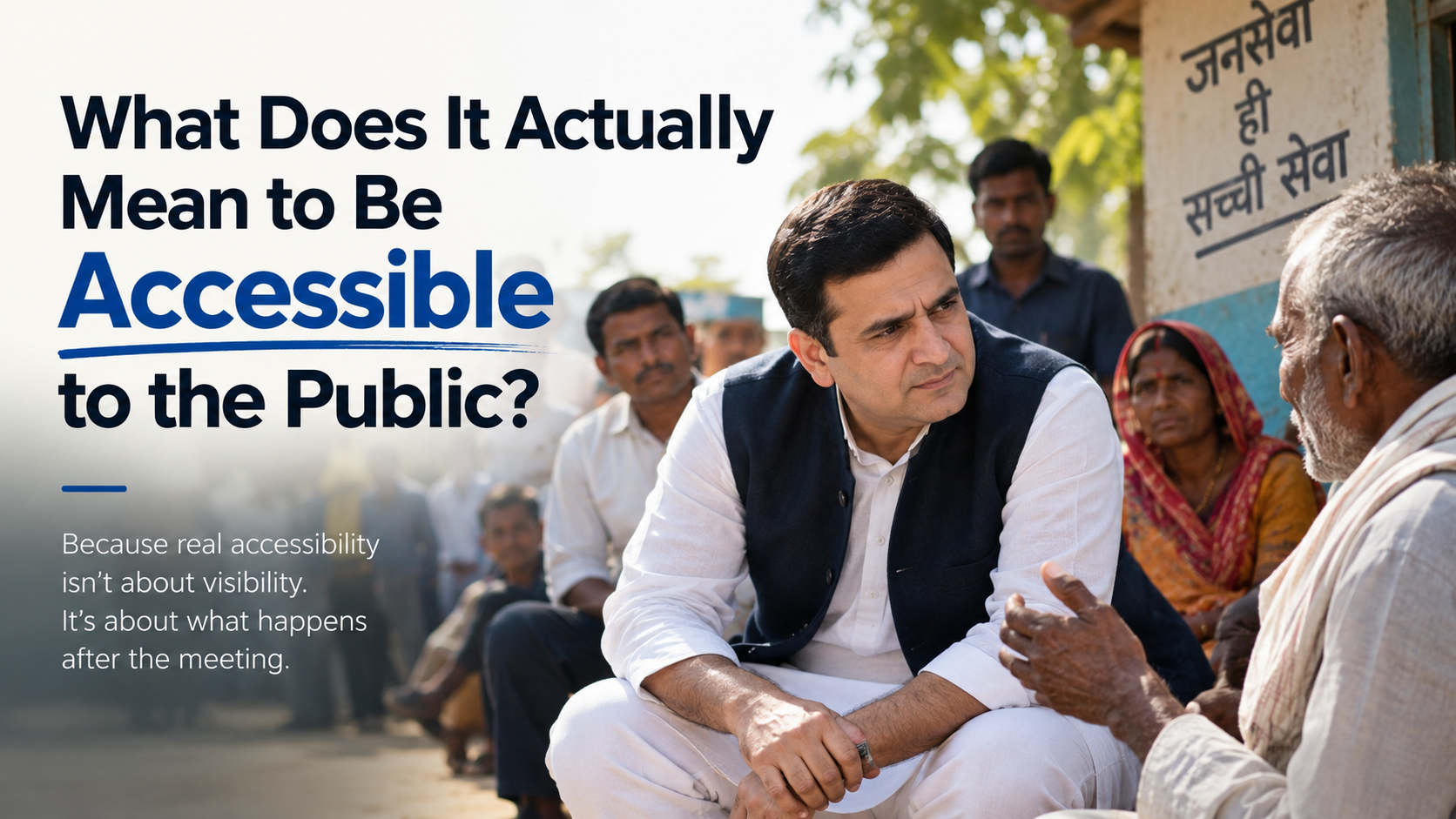
Sometimes, they lose because they stop listening.
Public opinion is often misunderstood.
Many people see it as nothing more than opinion polls, approval ratings, or social media trends.
In reality, public opinion is much deeper.
It is reflected in conversations between neighbours, concerns raised in local communities, discussions among business owners, farmers, students, workers, and families.
It is how people experience governance in their everyday lives.
Ignoring those voices comes at a cost.
The Difference Between Governing and Being Connected
Good governance is about making decisions.
Great governance is about ensuring those decisions are understood, accepted, and trusted.
A government may introduce an ambitious reform, invest in infrastructure, or launch welfare schemes.
But if people feel unheard or disconnected from the process, even well-intentioned policies can face resistance.
Citizens rarely judge governments only by what they do.
They also judge how governments communicate, respond, and engage.
People want more than announcements.
They want reassurance that their concerns matter.
Public Opinion Is an Early Warning System
Every successful organization listens to feedback.
Businesses study customer satisfaction.
Universities seek student feedback.
Companies monitor employee engagement.
Politics should be no different.
Public opinion acts as an early warning system.
It highlights dissatisfaction before it becomes frustration.
It reveals implementation gaps before they become political crises.
Leaders who treat criticism as valuable feedback often identify problems early enough to fix them.
Those who dismiss every criticism as politically motivated risk missing important signals.
Silence Doesn’t Mean Satisfaction
One of the biggest mistakes in politics is assuming that the absence of loud protests means public approval.
Often, people simply adapt.
They complain privately.
They lose trust gradually.
By the time dissatisfaction becomes visible, opinions have already hardened.
Election results rarely surprise the public.
They surprise leaders who stopped paying attention.
Why Listening Doesn’t Mean Agreeing
Listening to public opinion does not mean governments should abandon every difficult reform.
Leadership sometimes requires taking decisions that are initially unpopular.
Economic reforms, infrastructure projects, or structural policy changes often face resistance.
The challenge is not whether governments should always change course.
The challenge is whether they are willing to explain their decisions, engage with stakeholders, acknowledge concerns, and make improvements where necessary.
Listening is not weakness.
It is a sign of confidence.
People are more willing to accept difficult decisions when they believe they have been heard.
Perception Is Part of Governance
Politics is not only about delivering results.
It is also about building trust.
A policy can be technically sound but politically unsuccessful if people fail to understand its purpose.
Likewise, an average policy can receive broad acceptance if it is communicated honestly, implemented effectively, and supported by public confidence.
Governance and communication are not separate disciplines.
They strengthen each other.
When communication disappears, misinformation fills the space.
When engagement disappears, trust begins to fade.
From a political consulting perspective, one lesson becomes clear.
Campaigns do not create public trust overnight.
They amplify what people already feel.
No advertising strategy, slogan, or speech can permanently replace genuine public confidence.
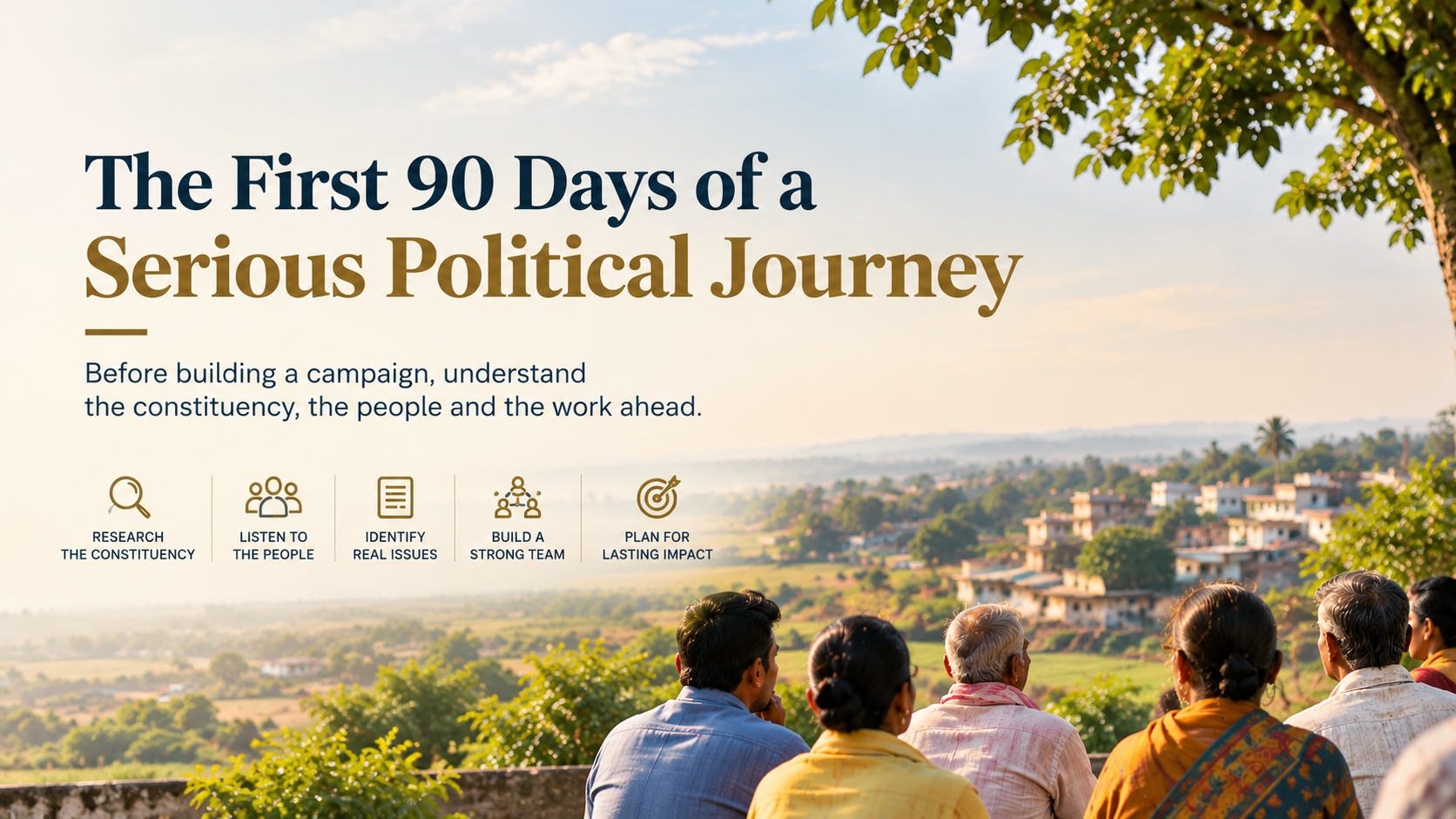
The strongest campaigns are usually built on months, sometimes years, of listening.
Constituency visits.
Surveys.
Ground research.
Stakeholder conversations.
Booth-level feedback.
Political strategy begins with understanding people before trying to persuade them.
That is why the best consultants spend as much time listening as they do planning.
The Real Cost
Ignoring public opinion does not always produce immediate consequences.
Sometimes the effects appear slowly.
Public trust weakens.
Citizen participation declines.
Policies face greater resistance.
Institutions lose credibility.
Eventually, even genuinely good initiatives are viewed with skepticism because trust has already been damaged.
Rebuilding that trust is always harder than preserving it.
Democracy is built on a simple idea.
People do not expect governments to be perfect.
They expect governments to listen.
Public opinion should never be treated as an obstacle to governance.
It should be treated as one of its most valuable resources.
Leaders who ignore it may still win arguments.
They may even win headlines.
But over time, they risk losing something far more important.
The confidence of the people.
And in politics, public trust is not just another statistic. It is the foundation upon which every election, every policy, and every government ultimately stands.
Should governments actively adapt policies based on public opinion, or should they stay committed to long-term reforms even when they are temporarily unpopular?

Leave a Reply