
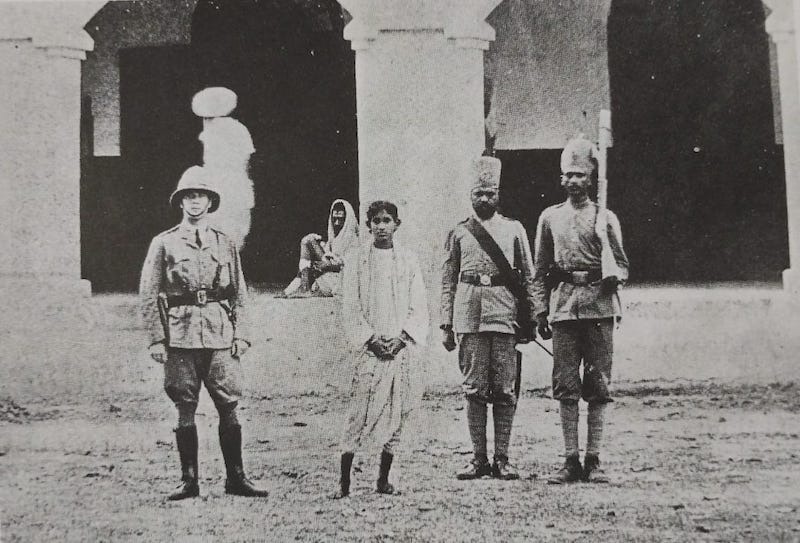
11 August 1908.
Muzaffarpur Jail.
The British put a rope around the neck of Khudiram Bose and dropped him.
He was eighteen years old.
Let that sit for a second. Eighteen. Most boys that age are still figuring out who they are. Still arguing with parents. Still thinking about school or games or the girl next door. Khudiram had already decided something most grown men never decide. He decided the empire sucking the life out of his country did not get to sleep peacefully. He decided living under foreign boots was worse than dying. And the British answered that decision with a noose.
He came from a small place. Midnapore district. Ordinary family. Nothing in his early life screamed future revolutionary. But Bengal in those years was not ordinary. The partition of Bengal in 1905 had lit a fire. Lord Curzon had sliced the province to weaken the growing nationalist feeling. People pushed back. Boycotts. Swadeshi. Secret groups forming in the shadows. Young men reading banned books and talking about guns and bombs in whispered meetings. The air itself felt charged.
Khudiram got pulled into that current. He was still a teenager when he started moving with the revolutionaries. The Anushilan Samiti circles. The people who had stopped believing that petitions and polite speeches would ever make the British leave. They had watched the empire take and take. They had watched Indians get beaten, jailed, and insulted in their own land. Something snapped in a generation of young men. Khudiram was one of them.
He and Prafulla Chaki were given a job. Target Douglas Kingsford. Kingsford was a British magistrate who had made a name for himself handing out harsh sentences to Indians. The kind of man who treated the ruled like dirt and expected gratitude for it. He had been transferred to Muzaffarpur, but the anger followed him. The plan was simple and brutal. Plant a bomb aimed at his carriage. Kill the man who represented the boot on the neck.
They waited. They watched. On 30 April 1908 they threw the bomb. It missed Kingsford. Instead it hit another carriage. Two women died. Mrs Kennedy and her daughter. Innocent. Completely uninvolved. That part is ugly and true. No amount of revolutionary fire washes it away. Two lives ended because the bomb did not land where it was supposed to.
Khudiram was caught soon after. Prafulla Chaki shot himself rather than be taken. Khudiram was eighteen and suddenly the full weight of the British machine came down on him. They arrested him. They put him through a trial that was never going to end any other way. The outcome was fixed the moment they decided an Indian boy had raised his hand against their power. They sentenced him to death.
And on a hot August morning they walked him to the gallows.
Accounts from that time say he walked steady. He did not beg. He did not cry for mercy from the people who had stolen his country’s future. Some say he was smiling. Some say he looked calm. What matters is he did not break. At an age when most are still scared of their own shadow, he faced the full weight of the British Raj and refused to kneel.
That is the part that still burns.
The British loved to talk about civilisation. They talked about law and order and the white man’s burden while they drained wealth, broke movements, and hanged children. They had built their empire on conquest and extraction. They had used force for decades. When Indians stayed peaceful they ignored them or locked them up. When Indians fought back they screamed terrorism and celebrated the executions. The hypocrisy was absolute. An empire built on violence suddenly discovered morality the moment the conquered stopped accepting it quietly.
Khudiram’s methods were hard. Revolution always is. Bombs do not choose carefully. Innocent people die when the powerful refuse to leave and the powerless finally refuse to submit. That is the ugly truth of every freedom struggle that was not handed over politely. The British never left politely. They left when the cost of staying became higher than the profit of ruling. Boys like Khudiram raised that cost.
He was not a saint. He was a young man who looked at the reality around him and chose action over safety. He came from a small town. He was pulled into the revolutionary current that was rising across Bengal. The Alipore bomb case. The secret societies. The anger that had been building for decades. He stepped into that fire knowing the price. And he paid it at eighteen.
Think about what that means. While British officers sat in their clubs drinking and talking about the natives, an eighteen-year-old Indian boy was ready to die to push them out. While the empire printed newspapers calling Indians ungrateful and uncivilised, that same boy was walking to the gallows without flinching. The contrast is sharp enough to cut.
Today some people will soft-pedal the story. They will talk about the tragic accident of the two women and stop there. They will call him misguided. They will distance themselves from the violence while still claiming the freedom that violence helped force. That is easy from a safe distance. It is harder to look straight at what the British were and what it took to push them out.
The empire that hanged Khudiram Bose had no moral high ground. None. They had ruled through force, divide, and extraction for generations. They had broken the economy. They had used famine as a tool. They had treated an entire people as subjects instead of citizens. When an eighteen-year-old answered in the only language they respected, they killed him and expected history to side with the hangman.
History did not.
His name is still spoken. Schools teach it. People still remember the date. The empire that killed him is gone. That is the final score.
There were many like him. Young men who decided that waiting for justice from the same people who denied it was a fool’s game. Some threw bombs. Some shot officers. Some went to the gallows. Some died in prison. The British called them terrorists. Later generations called them freedom fighters. The difference is only in who writes the history books after the empire falls.
Khudiram Bose was eighteen. They put a rope around his neck and dropped him. They thought that would end it. They thought fear would keep the rest quiet. They were wrong. The fire he carried did not die with him. It spread. It grew. And eventually it burned their empire down.
Remember him not because every choice was perfect. Remember him because at eighteen he was already braver than the men who signed his death warrant. Remember him because the British thought a rope would erase him. It did not.
They hanged a boy.
They called it justice.
We call it what it was.
A crime dressed up as law.
A teenager killed for refusing to stay on his knees.
And a reminder that empires fall when enough people decide the price of freedom is worth paying.


Leave a Reply