
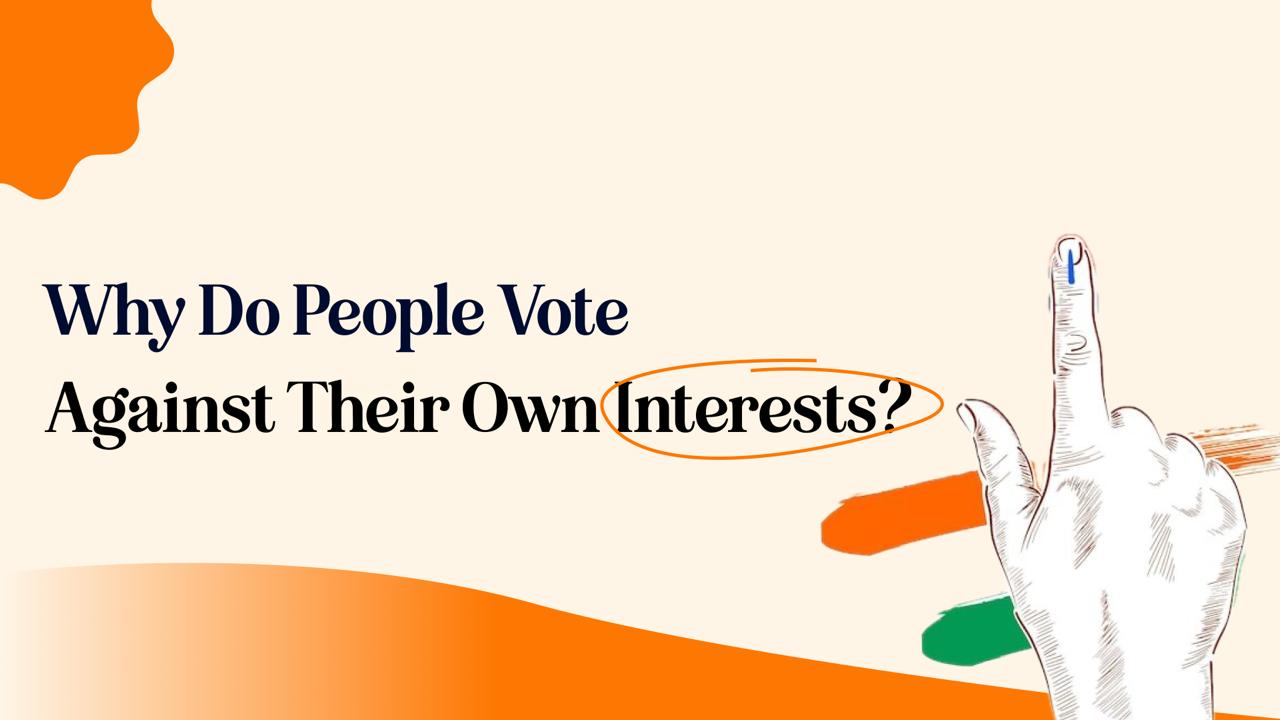
Every election, a familiar argument resurfaces.
“People are voting against their own interests.”
It’s a phrase heard across democracies, regardless of who wins or loses. Supporters of one party use it to criticize supporters of another. Political commentators repeat it after unexpected election results. Social media turns it into a slogan.
But what if the phrase itself misunderstands how people make political choices?
The assumption behind it is simple: people should vote based on what gives them the greatest economic benefit. Better jobs, lower taxes, higher incomes, cheaper goods, or more government support.
Yet politics has never worked that way.
Human beings are not spreadsheets.
We don’t make political decisions the way we compare insurance plans or mobile phone prices. Our choices are influenced by identity, emotions, values, personal experiences, family traditions, and the stories we believe about our country and our future.
A farmer may vote for a leader because he feels respected.
A young graduate may vote because she believes in a vision of national progress.
A business owner may prioritize stability over immediate financial gain.
Another voter may care more about national security than economic policy.
Someone else may vote based on cultural identity or local leadership.
None of these decisions are irrational.
They’re simply based on different priorities.
The problem often begins when we assume that everyone defines “self-interest” in the same way.
Economists usually define self-interest in financial terms.
But voters often define it much more broadly.
For many people, dignity matters.
Identity matters.
Security matters.
Religious freedom matters.
Social values matter.
National pride matters.
A voter may knowingly support a policy that costs them financially because they believe it protects something they value even more.
From the outside, that decision may appear irrational.
To the voter, it makes perfect sense.
Political scientists have long argued that elections are rarely decided by economics alone.
People vote for stories.
For identities.
For hope.
For trust.
This is why campaigns spend enormous resources building narratives instead of simply publishing policy documents.
Most voters will never read a 200-page manifesto.
They will remember a story.
They will remember how a leader made them feel.
They will remember whether someone spoke to their fears or their aspirations.
This doesn’t mean facts don’t matter.
They do.
But facts compete with emotions, identity, and lived experience.
Another reason people appear to vote against their interests is that different groups have different time horizons.
Some voters focus on immediate concerns like inflation or employment.
Others think about the next decade.
Some are willing to accept short-term hardship if they believe it will lead to long-term benefits.
Whether that belief proves correct is a different question.
The important point is that voters are making choices based on what they think will serve them best, not necessarily on what outside observers believe is best for them.
There is also a tendency among political supporters to assume that if someone voted differently, they must have been misled.
That assumption can be dangerous.
It dismisses millions of people without trying to understand them.
Democracy becomes healthier when we replace judgment with curiosity.
Instead of asking,
“Why did they vote against their interests?”
perhaps we should ask,
“What interests were they trying to protect?”
That question opens the door to understanding rather than division.
It reminds us that democracy is not just about counting votes.
It is about understanding people.
The greatest mistake political parties make is assuming they already know what voters want.
The greatest leaders spend more time listening than assuming.
Because in politics, perception shapes reality.
And people’s interests are often far more complex than they appear.
In the end, voters rarely believe they are voting against themselves.
They vote for the future they hope to see, the values they want protected, and the leaders they trust to take them there.
Whether others agree with that choice is part of democratic debate.
Understanding why they made it is the first step toward strengthening democracy.

Leave a Reply