
Every election cycle brings renewed attention to one group that has the power to reshape political outcomes more than any other: young voters.
India is one of the youngest democracies in the world by population. Millions of first-time voters enter the electoral process every election, bringing fresh expectations, new priorities, and a very different way of engaging with politics.
They are not simply replacing older voters; they are redefining what political participation looks like.
The question is no longer whether young voters matter.
The real question is whether political parties truly understand them.
For decades, election campaigns relied heavily on traditional factors such as caste equations, regional identities, party loyalty, and family voting patterns.
While these influences continue to play an important role, they are no longer the only factors shaping electoral choices.
Today’s young voter is driven by aspirations as much as identity.
They are asking different questions.
“Will I find a good job?”
“Can I afford to buy a house?”
“Will my degree actually help me build a career?”
“Is public transport improving?”
“Is my city becoming safer?”
“Can I trust what politicians are promising?”
These are deeply personal questions, and increasingly, they are becoming political ones.
Unlike previous generations, today’s youth grew up in the digital era.
Their understanding of politics isn’t formed only through newspapers or television debates.
It is shaped every day through Instagram reels, YouTube podcasts, X (formerly Twitter), WhatsApp forwards, independent creators, live parliamentary clips, and real-time fact-checking.
Political speeches no longer end when the microphone is switched off.
Within minutes, they become short videos, memes, analysis threads, reaction posts, and public debates viewed by millions.
This has fundamentally changed political communication.
Young voters don’t just consume political content.
They evaluate it.
They compare it.
They question it.
They challenge it.
And when something doesn’t seem authentic, they move on quickly.
This generation is also less impressed by symbolism alone.
Announcements generate attention.
Delivery builds credibility.
A new infrastructure project may create headlines, but young citizens want to know whether it was completed on time, whether it improved daily life, and whether public money was used efficiently.
Performance is increasingly replacing perception as the benchmark for political success.
That is why governance itself has become a campaign.
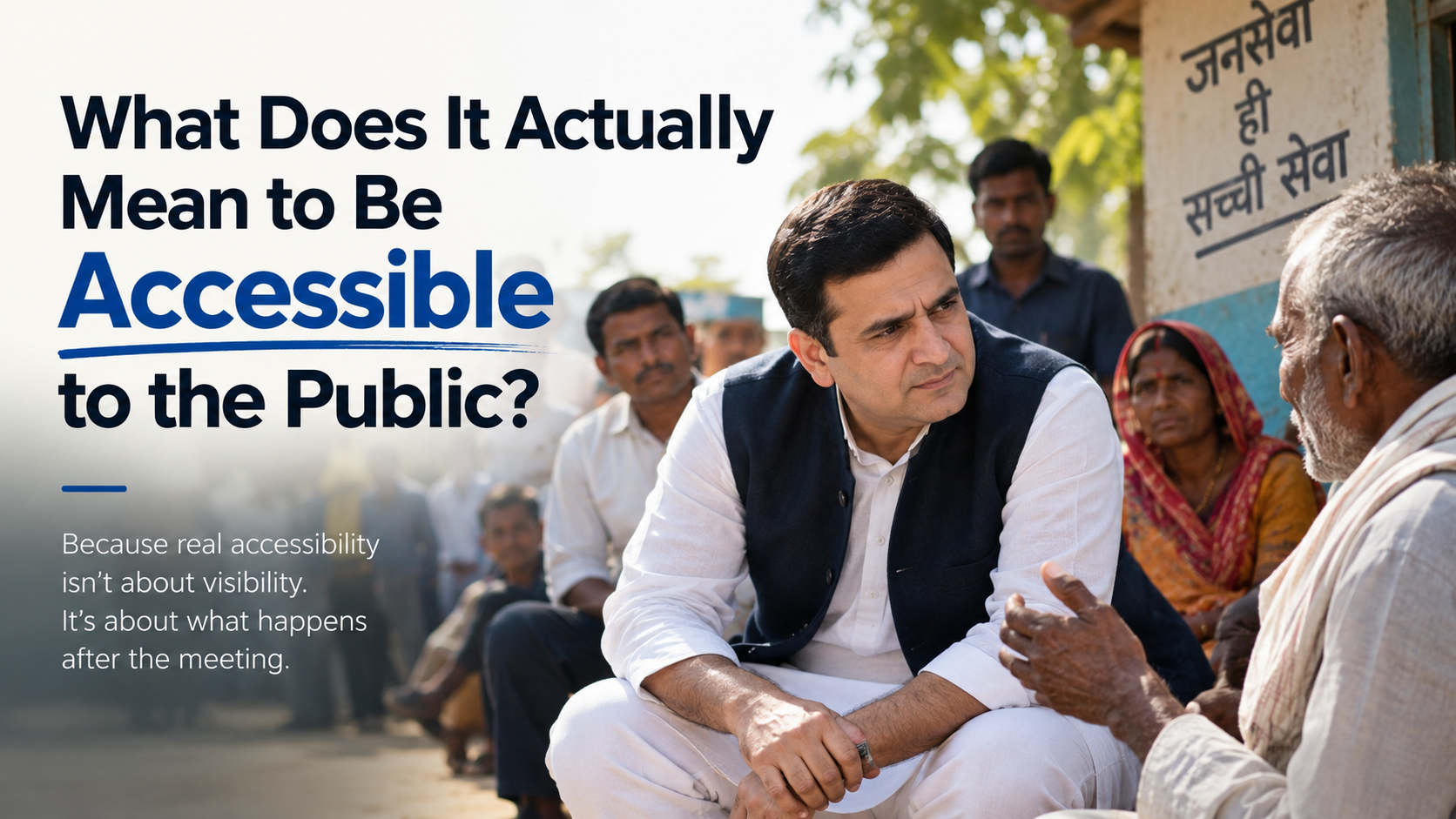
Another defining characteristic is the demand for accessibility.
Young voters expect leaders to communicate regularly, respond during crises, explain difficult decisions, and remain visible between elections.
Silence often creates more speculation than clarity.
Political leadership is no longer judged only by speeches in Parliament or election rallies.
It is judged by consistency.
However, one of the biggest mistakes campaigns make is assuming that all young voters think alike.
A first-time voter in Bengaluru may prioritize startups and innovation.
A student in Delhi may care most about education reforms.
A young farmer in Punjab may focus on MSP and agriculture.
A graduate in Bihar may worry about government recruitment.
A tribal youth in Jharkhand may prioritise local development and representation.
Their age may be similar.
Their aspirations are not.
This is where political strategy becomes more complex.
Winning over young voters is no longer about catchy slogans or viral videos.
It requires listening, understanding local realities, and offering credible solutions to real problems.
Trust has become the rarest political currency.
Young citizens are willing to support leaders across ideological lines if they believe those leaders are competent, transparent, and capable of delivering results.
Party loyalty is no longer guaranteed.
It has to be earned.
This doesn’t mean ideology has disappeared.
It means performance now competes with ideology more directly than ever before.
For political consultants, campaign managers, and policymakers, the message is clear.
The future of elections will not belong to those who speak the loudest.
It will belong to those who understand the changing aspirations of India’s youngest generation.
Because young voters are not simply choosing the next government.
They are quietly redefining what leadership, accountability, and democracy should look like in the decades ahead.
If you were advising a political leader today, what would you tell them to focus on to genuinely earn the trust of young voters over the next five years?
Would you prioritize employment, education, entrepreneurship, inflation, digital governance, mental health, women’s safety, climate action, political transparency, or something else entirely?

Leave a Reply